Australian National University walks back cuts to music and humanities
Caitlin Cassidy
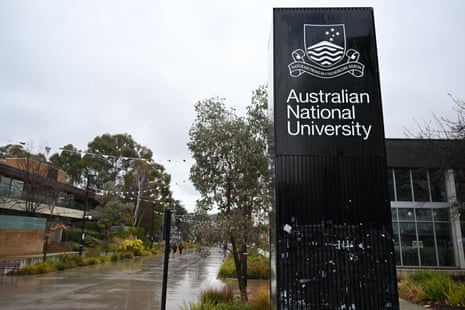
The Australian National University (ANU) has walked back on a major restructure to its arts and social sciences college after facing backlash from staff, students, politicians and stakeholders over the handling of its controversial $250m cost-cutting plan.
On Tuesday, ANU released its updated implementation plan for the college, after the initial proposal, released this July, was widely canned. It included shutting the Australian National Dictionary Centre, the Centre for European Studies, the Humanities Research Centre and the ANU School of Music, in addition to job cuts.
In September, days before the resignation of then-vice-chancellor of ANU, Prof Genevieve Bell, almost 30 staff in the school stopped work after an internal report warned of psychological hazards in their workplace related to the restructure.
The interim vice-chancellor of ANU, Prof. Rebekah Brown, said due to “higher-than-expected voluntary separations, staff attrition, retirements and vacancy management, the university’s financial position has improved” and humanities schools could be saved.
Its dean, Prof Bronwyn Parry, said the Dictionary of Biography and the Australian National Dictionary Centre secured its future through philanthropic generosity, while no structural changes would be made to the School of Music, which would feature a new Performance+ Hub.
Parry said the updated plan reflected the “extensive feedback received during consultation and demonstrates that we have listened and responded”.
Key events

Natasha May
NSW Health defends social media policy covering WhatsApp
Back in NSW health budget estimates, Greens MLC Amanda Cohn has asked NSW Health why, in its final social media policy, it was necessary to seek oversight of private communication like WhatsApp.
In August Guardian Australia revealed the doctors’ union concerns around this feature in the draft policy.
Health secretary Susan Pearce said they had received concerns from staff that there was some commentary that was “less than desirable” in these group chats and they were concerned people were being exposed to this commentary through their workplace.
The executive director of workforce, Richard Griffiths said some WhatsApp groups are in the several hundreds, so it was “appropriate we build into policy because the reach of groups is so wide”.
Griffiths said NSW Health wished to provide guidance for staff how to appropriately use social media, not to restrict their use.

Sarah Basford Canales
Shoebridge criticises Segal over antisemitism definition
The Greens senator David Shoebridge has criticised the antisemitism envoy, Jillian Segal, over how antisemitism is defined, saying those who conflate genuine criticism of Israel with antisemitism “do the cause no credit”.
In a Senate estimates hearing this morning, the Greens senator asked why Segal relied on the International Holocaust Remembrance Alliance’s (IHRA) definition for her report. IHRA’s working definition suggests antisemitism can include holding Jews collectively responsible for actions of the state of Israel and drawing comparisons of contemporary Israeli policy to that of the Nazis.
Shoebridge said:
I would join with anybody to fight antisemitism … genuine antisemitism. But when you and others conflate legitimate criticism of … the state of Israel, it’s appalling genocidal behaviour against Palestine. When you conflate that with antisemitism, you do the cause no credit.
The Liberal senator Paul Scarr interjected to make a point of order, requesting whether Shoebridge could “simply limit himself to asking questions rather than giving soliloquies”.
Segal said IHRA’s definition “makes it very clear that legitimate criticism of Israel in the same form as you would criticise another state is not antisemitic”.
She continued:
So, legitimate criticism is fine, and I think that has been a misunderstanding generally by some people in relation to what is permitted by IHRA, and hence, has resulted in very unfair criticism of IHRA.
Antisemitism envoy concedes she could have more broadly condemned neo-nazis
Sarah Basford Canales
The antisemitism envoy, Jillian Segal, says she told individual media outlets she condemned recent neo-Nazi rallies but conceded she could have made a broader statement.
At a Senate estimates hearing on Tuesday, the Greens senator David Shoebridge questioned her public response to the rallies:
I’ve seen you publicly condemn, put out proactive statements condemning, pro-Palestinian protests, but when the most high profile neo-Nazi protest is held out the front of a state Parliament House, you choose not to put a proactive public statement condemning it.
A proactive statement is industry jargon for a press release distributed to the media without being asked.
The envoy said the group’s actions were “quite despicable”, but she had been apprehensive about giving them more airtime than necessary.
Segal said:
I did convey to various news outlets who asked – those who approached me for a condemnation. I had a statement prepared. I did not put out a press statement. And you know, I note that perhaps I should have, to make it clear, but news outlets that did contact my office, I did convey that.
It’s a movement, as you say, grounded in hate and intimidation. And they just, they are absolutely seeking to disrupt public life, destroy our social cohesion. I was initially, I might say, reluctant to give them more airplay, but I take your point because they do crave notoriety.
Perhaps there should have been a broader statement, but I chose to do it through individual media responses, but be under no illusion, I do condemn them.

Patrick Commins
Queensland average home price passes $1m
The average Queensland home price has passed $1m for the first time, according to the Australian Bureau of Statistics’ latest stocktake on the total value of the country’s residential property market.
Queensland is the second state, after NSW, to reach the depressing milestone for many Australians amid a national housing affordability crisis.
The total value of dwellings climbed by 2.7% in the September quarter to $11.9tn, up 60% over the past five years.
That compares with $4.3tn in total retirement savings, and this booming wealth is helping to underpin households’ confidence and spending, according to UBS economists.
The ABS data showed that in NSW, the average home price was nearly $1.3m, followed by Queensland at just over $1m, and the ACT at $968,000.
The lowest priced homes on average were in Northern Territory, at $564,000, followed by Tasmania at $669,000.
The average dwelling price in Western Australia was $948,000, in Victoria $919,000, and in South Australia $887,000.
Fatal WA fire has burnt 4200 hectares
Just a little more on that deadly fire in the south of Western Australia: according to emergency alerts, a watch and act warning is now in place for the blaze near West River.
It has burnt 4200 hectares (10378 acres), and 60 firefighters are at the scene working on containment lines, according to the latest warning.
Allow Facebook content?
This article includes content provided by Facebook. We ask for your permission before anything is loaded, as they may be using cookies and other technologies. To view this content, click ‘Allow and continue’.
Sarah Basford Canales
Foster says detention centre incident numbers ‘too many’ as reports show sharp increases
Over in Senate estimates this morning, the home affairs department secretary, Stephanie Foster, has acknowledged that the number of critical incidents in onshore immigration detention centres is “too many”.
The department’s latest annual report showed there were 59 critical incidents per 1,000 detainees over 2024-25 compared to 27.84 the year before, representing an 11.93% increase.
The report also showed an increase in the number of “sexual assault critical incidents” over 2024-25, rising to 30 from 19. The department’s report does not provide further details on whether the alleged perpetrators are detainees, staff or other persons.
The report highlighted a “correlation” between a higher rate of detainees with criminal histories (88.55%) and increases in the number of critical incidents.
However, Foster said:
The number of incidents is too many, and we need to keep working if we are to reduce that number. And there are a range of things that we have done over the past few months, and a range of things that we will continue to do that will help ameliorate that, and we can go through that in outcome three [later on Tuesday].
Read more:
Natasha May
Mental health services at Northern Beaches hospital won’t be diminished in public transition, minister says
The NSW mental health minister, Rose Jackson, says there will be no reduction in mental health services at Northern Beaches hospital after the government repurchased it in a deal that will integrate it into the public system.
The hospital had a 20-bed ward for private health care admissions, in addition to a 20-bed ward for public health care admissions, a 15-bed ward for the care of older people and a six-bed ward for short stay crisis mental health admissions.
Asked about the hospital in NSW budget estimates this morning, Jackson confirmed there would be no diminution, but said there “may be an opportunity for services to be enhanced”.
The state’s health secretary, Susan Pearce, said the team was “working day and night” as they finalised the contractual arrangements of the hospital’s transition in the next week or so.

Benita Kolovos
Allan rejects claims Victoria’s donation law changes aim to dodge high court
Victoria’s premier, Jacinta Allan, has denied that the government’s proposed changes to political donation laws are designed to avoid a high court finding that the existing rules are unconstitutional.
Such a finding would have huge ramifications for the November 2026 election and federal donation laws.
Speaking earlier this morning, Allan said:
There is a matter before the high court that is testing this question. That matter is still going through the high court processes, and there has been no finding or determination in that matter. I will acknowledge, the matter before the high court has required an examination of the settings here in Victoria.
The premier said the bill was about ensuring there was “fairness and transparency around how political parties and independent candidates are supported during the conduct of elections”.
Benita Kolovos
Victorian independent candidate urges Libs and cross-bench not to support donation laws
Melissa Lowe, one of the independents taking the Victorian government’s electoral donation laws to the high court, has described proposed changes as a “fix” that would “entrench unfairness”.
The premier, Jacinta Allan, earlier this morning announced plans to introduce a cap on how much Labor, the Liberals, and the Nationals can withdraw from their fundraising bodies, known as “nominated entities”. Under the proposal, major parties would be limited to withdrawing up to $500,000 over an election period.
Independent candidates would also be allowed to establish a nominated entity, which is not permitted under the existing laws. But they would be restricted to withdrawing only $50,000.
In a statement, Lowe described the proposed changes as an “extraordinary development” that proved the state’s donations laws were “designed to protect the major parties from competition and discourage the electorate from supporting independents”. She has argued in the past that a fair outcome would be to abolish nominated entities.
Lowe continued:
Rather than scrap a system designed to deny voters fair freedom of choice, the government has decided instead to try to put in a ‘fix’ that would be likely to entrench the unfairness confronted by new entrants, who would still have to battle the donations cap while the majors got advance public funding, courtesy of the taxpayers.
If [opposition leader] Jess Wilson had any ticker she’d oppose this and enlist the crossbench in the upper house to do the same.
Patrick Commins
ANZ abandons RBA rate cut call as inflation rebounds
The economics team at ANZ have scrapped its forecast of one more Reserve Bank of Australia (RBA) rate cut in 2026, joining a broad consensus view that the cash rate is on an “extended hold” at 3.6%.
Inflation has bounced back in recent months, with data showing consumer price growth accelerated to 3.8% in the year to October, way above the RBA’s 2-3% target range.
ANZ’s head of Australian economics, Adam Boyton, said he thought the lift in underlying inflation was “likely temporary”.
But signs of ongoing inflation pressures in the monthly CPI, GDP growth running around the RBA’s estimate of potential, and the RBA’s view that the labour market is tight, all suggest the RBA’s board is likely to be cautious about further easing.
At the same time, the rise in the unemployment rate this year and conflicting signals across leading indicators of demand make it difficult to see a case for a 2026 rate hike.
Financial markets are no longer pricing any meaningful chance of a rate cut over the coming 12 months, and put a more than 40% chance of a hike by November 2026.
The next RBA monetary policy board decision is in a week’s time.
Man dies in WA bushfire
A man has died while responding to a bushfire at West River in southern Western Australia, police have confirmed.
About 2.20pm on Monday, emergency services responded to reports of a large bushfire threatening several homes in the vicinity of West River and Fitzgerald roads, police said.
The fire burned about 300 hectares (741 acres) of farmland.
A man in his 60s, believed to live in the area, was operating a front-end loader to establish a firebreak when his vehicle was engulfed in flames.
Police said in a statement that he died at the scene.
An investigation into the circumstances surrounding the man’s death will be conducted by WA Police, who will prepare a report for the coroner.
The cause of the fire remains under investigation but is currently not being treated as suspicious.
Japanese encephalitis found in Australia for first time this season
The Victorian department of health has confirmed the first detection of Japanese encephalitis in mosquitoes for the 2025–26 season, with the virus found as part of a disease control program near Horsham, in the state’s north-west.
The virus was found in a mosquito trap in the Horsham Rural city council area as part of Victoria’s Arbovirus Disease Control Program, the department said.
It marks the first detection of the virus in Australia this season, and the department said it was working closely with the council to treat mosquito breeding sites and reduce the risk to the community.
Japanese encephalitis is a rare but potentially serious disease transmitted through mosquito bites. Most infected people have no or only mild symptoms, but in around 1 in 250 cases, it can cause severe brain infection (encephalitis), which can be fatal.
Victoria’s chief health officer, Dr Caroline McElnay, said detecting the virus in mosquitoes caught in traps was vital for informing the community about current health risks on the preventable disease.
A free Japanese encephalitis vaccine is available for eligible people due to their increased risk of exposure.
Simple actions like wearing repellent, covering up, and limiting outdoor activities at dawn and dusk can help reduce your risk.
Anyone can be bitten by mosquitoes, but people living, working or spending time outdoors in northern Victoria, especially near rivers, may be at higher risk.
A free Japanese encephalitis vaccine is available in 24 local government areas across Victoria, including Horsham Rural city council, for eligible people at increased risk, including those not eligible for Medicare.

Josh Taylor
Social media ban won’t be ‘digital isolation’ for teens, department says
The department of communications deputy secretary, James Chisholm, rejected concerns raised by Greens senator David Shoebridge that the under-16s social media ban will isolate teens online, particularly those in regional areas.
Chisholm told Senate estimates on Tuesday that the ban applied to a limited number of platforms, and that children “are not excluded from the internet, from technology generally”.
Shoebridge said the government was putting kids into “digital isolation”.
I was just talking to a young person from a regional part of this country who lives like, an hour away from a regional town.
They are going to lose all of their social media connections on Instagram, on Snapchat. They are already physically isolated and their ability to communicate [to] break down that isolation through social media was being taken off them because, yes, they have access to the internet, but their friends circle on Instagram, their friends circle on Snapchat is all just being literally ripped from them.
What do you say to that young person in physical isolation?
Chisholm said children were not in “digital isolation” because they would still have access to online services. He said children would be able to access those connections again once they turn 16, pointing to the platforms’ advice that those accounts would be placed on hold until they reactivate at 16.
He said the government policy was “very clear” that children under 16 should not have social media accounts.
LinkedIn, Lemon8 could be added to under-16s social media ban

Josh Butler
More platforms are likely to be added to the federal government’s social media ban for under-16s after the scheme comes into effect next week, with the communications minister, Anika Wells, saying if large numbers of kids migrate to other sites or apps not currently in the framework, they could also be lumped in.
Speaking in Adelaide today, Wells told media to “stay tuned” for news about Lemon8, an Instagram-style app not currently included in the ban. She said:
But I’ve also made the point LinkedIn is currently an exempt platform. If everybody ends up on LinkedIn, and LinkedIn becomes a place where there is online bullying, algorithms targeting of 13 to 16-year-olds in a way that’s deteriorating their mental and physical health, then we will go after LinkedIn, and that’s why all platforms are on notice. We have to be agile and dynamic.
The ban comes into effect on 10 December. Several platforms have warned users about the age verification methods they will use, but others have not yet notified their customers. The Coalition opposition is raising concerns about the timing and implementation of the ban, and at least one legal challenge is in the works.
Wells said the government “will not be flinching in the face of any intimidation, any threats” from big tech platforms who may be considering challenging the ban. She warned that “people with ulterior motives are going to throw the kitchen sink and try to strike this down, or water this down”.
Wells will speak and take questions at the National Press Club in Canberra on Wednesday.
Australian National University walks back cuts to music and humanities

Caitlin Cassidy
The Australian National University (ANU) has walked back on a major restructure to its arts and social sciences college after facing backlash from staff, students, politicians and stakeholders over the handling of its controversial $250m cost-cutting plan.
On Tuesday, ANU released its updated implementation plan for the college, after the initial proposal, released this July, was widely canned. It included shutting the Australian National Dictionary Centre, the Centre for European Studies, the Humanities Research Centre and the ANU School of Music, in addition to job cuts.
In September, days before the resignation of then-vice-chancellor of ANU, Prof Genevieve Bell, almost 30 staff in the school stopped work after an internal report warned of psychological hazards in their workplace related to the restructure.
The interim vice-chancellor of ANU, Prof. Rebekah Brown, said due to “higher-than-expected voluntary separations, staff attrition, retirements and vacancy management, the university’s financial position has improved” and humanities schools could be saved.
Its dean, Prof Bronwyn Parry, said the Dictionary of Biography and the Australian National Dictionary Centre secured its future through philanthropic generosity, while no structural changes would be made to the School of Music, which would feature a new Performance+ Hub.
Parry said the updated plan reflected the “extensive feedback received during consultation and demonstrates that we have listened and responded”.
How the first Aboriginal bilingual school in NSW is resurrecting an Indigenous language
The Gumbaynggirr Giingana Freedom school in Coffs Harbour opened three years ago amid a broader push to breathe new life into the critically endangered Gumbaynggirr language.
As Indigenous languages decline nationally, Gumbaynggirr is experiencing a resurgence.
For 12-year-old Darruy, the difference to his previous school is “like night and day”. He says:
The other school … they didn’t really understand the components of Aboriginal culture. I do prefer this school a lot more, because they understand how culture is to us.